

In the energy sector, taxation is not merely a financial tool for the State but becomes a strategic element capable of influencing economic behaviours and production choices.
In this article, Orazio Corleto, Director of Tax & Accounting at EP Produzione, and Livia Salvini, Professor of Tax Law at LUISS “Guido Carli” University in Rome, discuss how the tax structure, both at the national and European levels, impacts the sector from a strategic and operational perspective, shaping prospects for investment and innovation.
***
“The energy sector has fiscal characteristics that make it unique: energy companies not only have to deal with the usual taxes applicable to any industrial activity, but also manage a range of specific taxes and parafiscal charges that significantly impact operational costs”. Livia Salvini immediately highlights the peculiarities of the energy sector from a tax perspective: “Consider excise duties, applied both to fuels and electricity. They represent one of the main sources of tax revenue for the State and their management constitutes a significant source of burden and responsibility for companies in the sector.”
“We often find ourselves emphasizing a fact”, says Orazio Corleto, “namely that the State’s taxation system towards our supply chain, takes on the role of true economic or environmental policy, steering investments toward certain activities or productions while penalizing others”.

That’s exactly right, Orazio,” adds the Professor. “The goal of taxation in the sector, especially from a forward-looking perspective, is also to encourage virtuous behaviours and discourage harmful ones by companies and organizations. We could therefore argue that energy taxation and para-taxation transform into tools for modulating environmental impact,” continues Salvini, “taking the form, for example, of system charges to support the development of renewable energies, taxes on polluting emissions or environmentally favourable subsidies (EFS) and environmentally harmful subsidies (EHS), whose careful recalibration can result into incentives or disincentives for specific modes of energy production and consumption”.
However, such recalibration is not always simple or possible. An emblematic example of this dynamic is represented by the incentives for small energy consumers, including households with limited consumption. While these incentives reduce the tax burden and are therefore to be regarded positively, they also encourage consumption that often originates from non-renewable sources and, therefore, environmentally harmful.
The influence of European regulations is, of course, crucial for Italian energy taxation, as they determine the criteria and standards that guide the choices and policies of member states. Salvini explains how the proposed reform of excise duties serves as a concrete example of ‘environmental’ taxation promoted by the Union, aiming to differentiate taxes based on the environmental impact of energy products and steer consumption toward renewable sources. “The idea is to apply a fiscal penalty to activities that involve harmful emissions”, explains the Professor, “while incentivizing sustainable production”. However, the very principle of differentiated environmental taxation comes with several challenges. “This approach risks to create an excessively punitive taxation for traditional energy sources, increasing costs for consumers and undermining the competitiveness of Italian businesses”, emphasizes Livia Salvini. The balance between incentives for ecological transition and economic sustainability is not easy and represents a complex challenge on which Europe must reach a consensus.

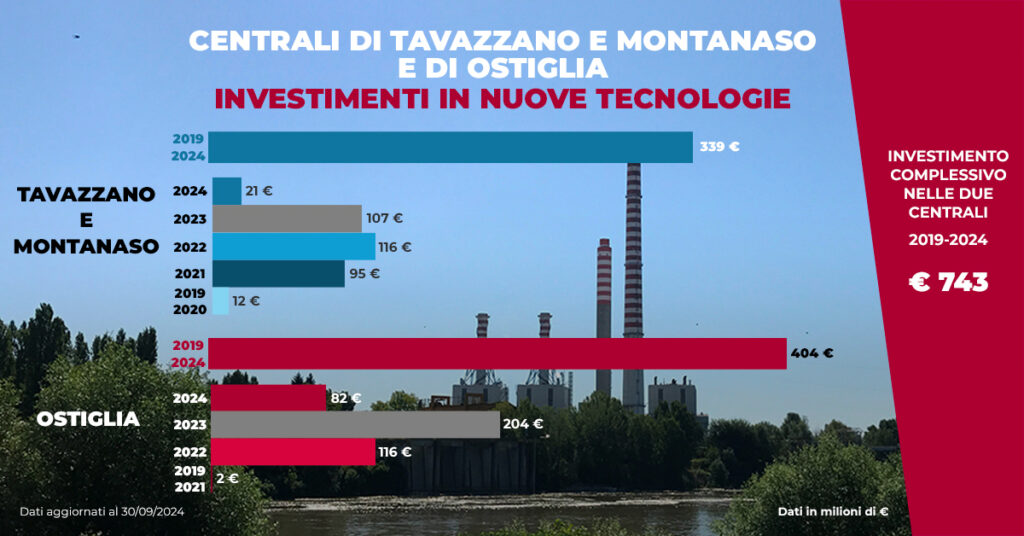
This is a crucial point for our operations at EP Produzione, which I could define as ‘regulatory and fiscal uncertainty'”, says Orazio Corleto. “When we talk about structural investments, such as those related to the modernization of our Tavazzano e Montanaso and Ostiglia Power Plants, the tax burden and regulatory instability are critical factors.” In an international group like EPH, of which EP Produzione is a part, the decision to invest in one country or in another is also determined by fiscal stability and the ability to predict future tax burdens. “In Italy, unfortunately, the tax system is subject to frequent changes, often driven by unexpected or unpredictable circumstances, which create significant uncertainty”, Corleto adds.
“Every change, whether a tax rate or a parafiscal charge, impacts financial statements and profitability projections, potentially leading companies like ours to refrain from making new investments”, explains Corleto. The need for a stable and predictable system is evident: the energy sector requires significant investments and long-term planning, and stable regulations, combined with “legal certainty,” is essential to ensure sustainable returns.
“This is an issue we often consider even from a tax perspective”, adds Professor Salvini. “Without regulatory and fiscal stability, even the best business plan can become unreliable, with potential repercussions on investments and employment”.
The topic of tax incentives emerged as central for the implementation of innovative projects such as the Fiume Santo Energy Park, an EP Produzione initiative which integrates traditional and renewable energy sources. Corleto explains that, in theory, there are incentives such as tax credits and local contributions to facilitate the adoption of these technologies. “But basically”, he admits, “many of these tools are difficult to access and often turn out to be hard to quantify and incorporate into a long-term business plan”.
The difficulty intensifies when we talk about new technologies like hydrogen, whose tax regulation is still uncertain. “In this respect,” specifies Salvini, “we can’t help but point out that despite hydrogen’s importance for the planet’s future and the ongoing ecological transition, there is still no stable and concrete framework of incentives to make these projects achievable”. Such incentives should not only be available but also sufficiently structured to act as a real lever for supporting sustainable innovation. “Unfortunately”, Corleto echoes, “the current situation involves fragmented regulations that limit the potential impact of these incentives, with the risk to slow down the evolution toward a more sustainable energy mix”.
A central topic of the discussion was the issue of extra profits and the related extraordinary taxation: a complex, controversial and long-debated measure in recent years. Corleto describes how this tax, although introduced to support the economy during a crisis, has proven particularly punitive for energy companies, with rates nearing 80%. “This high tax pressure”, he states, “has put and continues to put the sector under significant strain, again impacting the aforementioned issue of legal certainty, indispensable for a company operating in a free market”. The risk, according to Corleto, is that this taxation discourages future investments, particularly for international groups that must evaluate the convenience of operating in one country over another.
Professor Salvini has an equally strong position on the extraordinary tax on energy companies’ extra profits, highlighting the widespread dissatisfaction in the sector. “Many companies consider this tax as a disproportionate and unfair measure. Not surprisingly, the issue also challenged also the Constitutional Court which, called to judge the legitimacy, has recognized the legality of this measure by virtue of its extraordinary nature, but expressed concerns about the principle of fiscal capacity”, Salvini explains. “The problem is that emergency taxation, like this extraordinary measure, risks to create a misalignment between the State’s budgetary needs and taxpayers’ rights. A precedent has been set”, Salvini emphasizes, “and it is possible to foresee that the issue will continue to be a topic of discussion, not only in legal contexts, but also as a model for future interventions”.
Looking to the future developments in the sector and its relationship with taxation, both speakers agree on the need for a tax reform that ensures stability and fairness. “From my perspective – and I believe from that of the entire energy sector – the Italian tax system should evolve toward greater predictability”, Corleto hopes, “and tools like the Cooperative Compliance scheme could offer an opportunity to reduce uncertainties”. For a power generation company, joining the Tax Compliance regime means being able to rely on constant and preventive dialogue with the Tax Agency, which allows to make safer financial planning and to invest with greater tranquillity. “A collaborative approach between companies and tax authorities”, Corleto emphasizes, “is the first step toward a tax environment conducive to investments”.
“I agree that it would be a positive and long-awaited evolution”, Salvini replies. “I believe that two trends could emerge in the coming years: on one hand, the Global Minimum Tax, a measure aimed at reducing tax competition among countries and leveling the conditions for multinationals, by harmonizing taxation from State to State on different sectors; on the other hand, and in some ways as a continuation of this initiative, the development of a direct and more integrated European taxation”. This could include a real European fiscal policy, with taxes managed directly by the Union, and a legislation that would reduce the disparities among countries. “It would be a step forward for the energy sector, which could benefit from a consistent regulatory framework at the continental level”, observes the Professor, “but it is an ambitious goal that requires broad consensus, and it will not be easy to achieve”.
Nonetheless, the creation of a shared European taxation would represent a crucial element of stability and fairness, not only for the energy sector – where it is particularly evident-, but for the entire European project, contributing to an energy transition and a sustainable future shared among all its citizens.